
Start a Gordon Property Search
Address, owner name, and parcel number are the keys that hold Gordon County property records together. When the address is known, start at QPublic. Its parcel card and map link the situs to the tax-roll owner, the parcel key, legal-description clues, values, and mapping tools. Then carry the owner and deed reference into the Clerk's land index. Use the parcel key in the tax and GIS systems. No single result settles everything. The assessor roll exists for assessment. The deed index tracks filed instruments. The Tax Commissioner keeps bills and payments, and GIS supplies map context. Keep the date and source with every fact you copy, because a freshly recorded deed can appear before the roll catches up.
- Search the assessor by address, owner, or displayed parcel number.
- Match the newest deed by party and legal description.
- Check assessment fields, exemptions, the tax bill, and payment status.
- View the parcel and surrounding context in Gordon GIS.
- Request certified copies, permits, or older books from the proper custodian.
Gordon County Records Custodians
Three offices hold the core Gordon County property records. The Clerk records deeds, plats, liens, fi fas, and UCC filings. The Board of Assessors maintains the parcel roll and the GIS gateway. The Tax Commissioner issues bills, collects payments, and pursues delinquencies. Need a certified copy? Ask the office that created the record. One desk cannot vouch for another's data.
Gordon County Clerk of Superior Court
101 S. Piedmont Street
Calhoun, GA 30701
706-629-9533
Gordon County Board of Assessors
215 N. Wall Street, Suite 2
Calhoun, GA 30701
706-629-6812
Gordon County Tax Commissioner
215 N. Wall Street
Calhoun, GA 30701
706-629-9242
Gordon's Free Historic Deed Index
The Gordon QuickLink index opens free access to scanned land-record index books. The books cover 1848 through 1993. Search a grantor or grantee. Read the index page and copy the deed book and page. Because the start predates the county's 1850 creation, an early entry may carry predecessor-county context. Remember that QuickLink is only an index. Take its citation into GSCCCA or Kofile to reach the book image. You can also send it to the Clerk. Georgia's modern systems add searches by instrument, lien, plat, subdivision, lot, map, address, and PT-61. Account or image charges may apply. Open Gordon QuickLink to begin with the index books themselves.
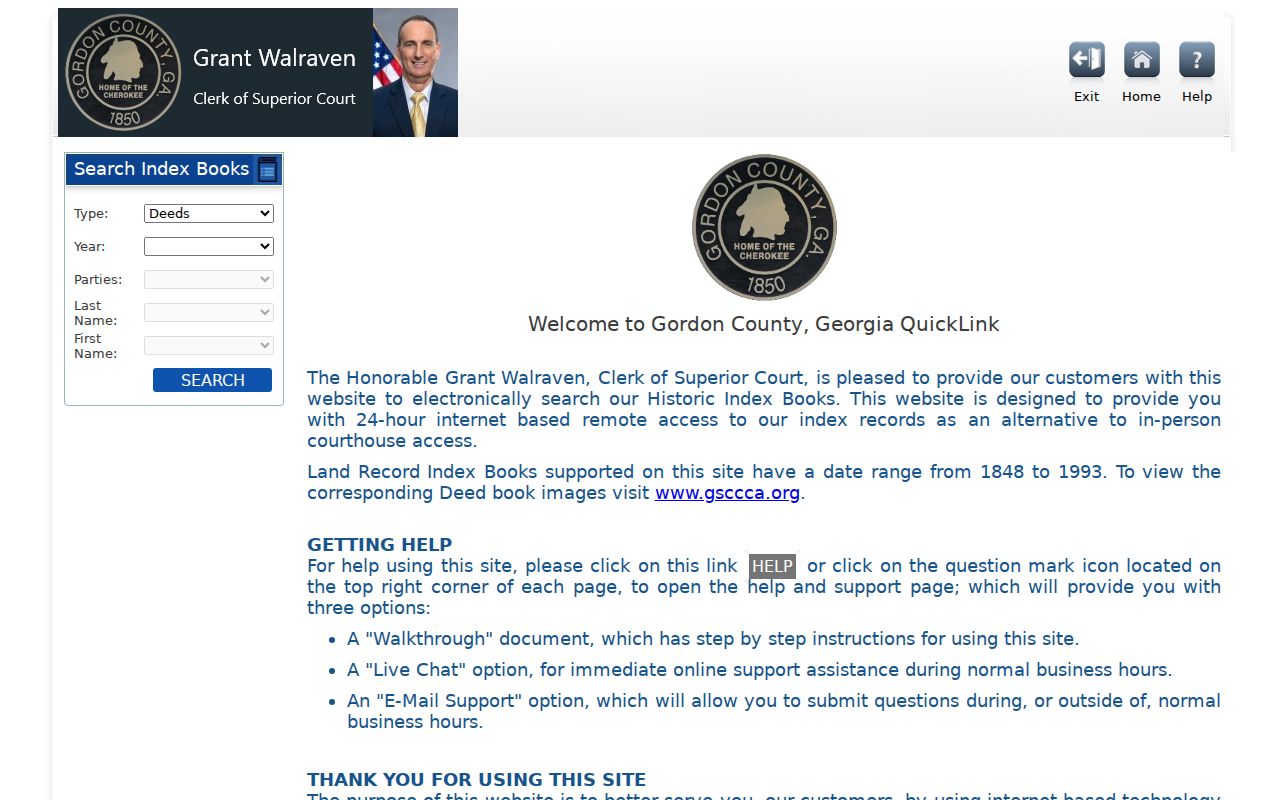
That view shows why book and page stay the essential search facts. The county-coded Kofile workspace is the next land-record screen. Open Gordon's Kofile search endpoint to go straight to the workspace.
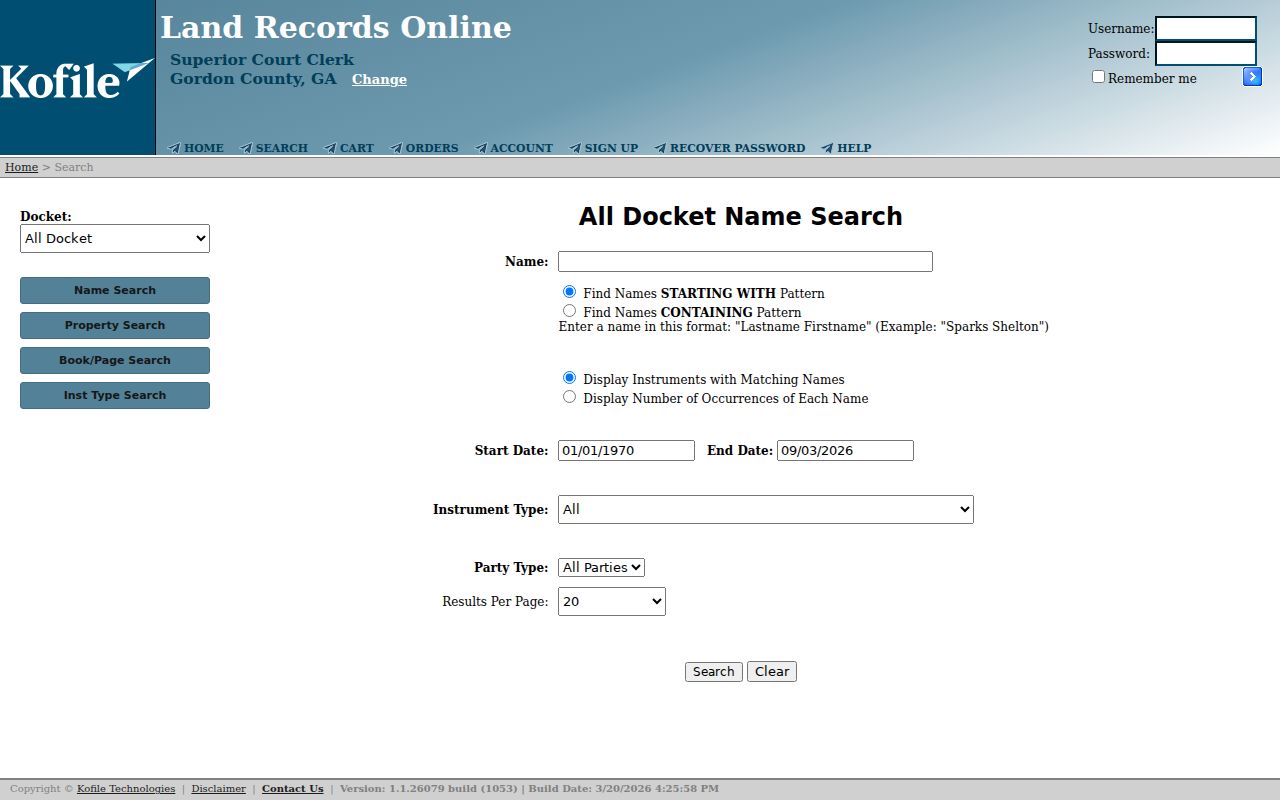
The second screen illustrates the handoff from index clues to the search workspace.
Read a Gordon QPublic Card
An assessor parcel card can carry the parcel number, roll owner, mailing and situs addresses, legal description, acreage, tax district, land-use code, value fields, exemptions, building facts, recent sales, and map links. Not every field shows up on every parcel. Record blanks as blanks.
| Field | What it answers | Limit |
|---|---|---|
| Owner and mailing | Who and where the roll lists for tax mail | Not proof of residence or title |
| Situs and parcel | Location and current map key | Can change after a split |
| Value fields | Assessment parts for one year | Not a sale appraisal |
| Last sale | Date, price, deed clue | Nominal sales need review |
A 2026 planning map sample illustrates the pattern with parcel `1141 226`. It shows an LLC owner, a Stirrat Road situs, acreage, value, and report, soil, definition, imagery, and map links. The popup format is local, and fields vary.
Gordon County Land Record Types
Gordon County property records work as a set. Deeds describe transfers. Plats depict recorded lots. The roll supplies the tax-year owner and value fields. Bills show charges and payment status. Liens, probate files, and permits can explain a change that no summary screen resolves.
| Record Type | What It Documents | Kept By | Access |
|---|---|---|---|
| Deeds | Transfers, parties, dates | Clerk of Superior Court | Free index; image rules vary |
| Mortgages and liens | Debt and recorded claims | Clerk of Superior Court | GSCCCA and Clerk |
| Tax and assessment | Value, exemptions, bills | Assessor and Tax Commissioner | Free public portals |
| Plats and parcels | Lots and map context | Clerk and GIS | Plat docket and viewer |
| Building permits | Project history | County or city | Portal or records request |
Turn to Gordon County deed records for the transfer chain and to tax records for value and payment facts. A map or permit adds context but cannot replace the deed.
Gordon GIS Lines Need Proof
The Gordon GIS office maintains the county's parcel and address data. It also links the public map. GIS can locate a polygon. It can show nearby parcels, reveal zoning or future-land-use context, and lead to a report. The data is dynamic and provided as is. A visible line is not a legal survey. When rights depend on a boundary, compare the line with the deed description, the recorded plat, any easement, and a current survey. Larger data requests require a signed disclaimer, while QPublic stays the free interface. Review the live Gordon GIS source for current layers.
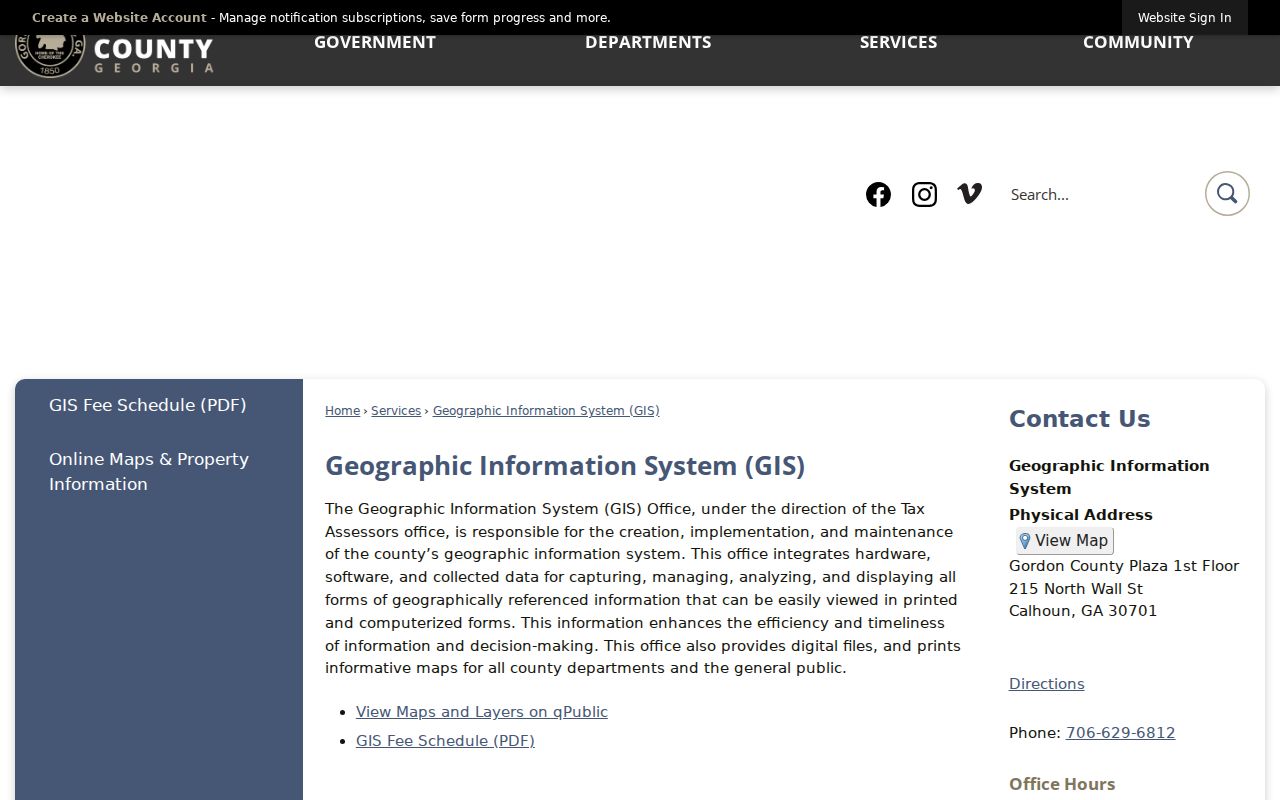
The office is the fallback for an unresolved map key, layer, print, or export.
Gordon Taxes Use Two Offices
Two offices split the job. The assessor sets value and exemptions; the Tax Commissioner issues and collects the bill. Georgia generally uses 40 percent of fair-market value as the assessed base. Exemptions or special programs may then reduce it. The bill then applies the levy to taxable value. Neither figure is a recorded sale price or an appraisal. Online balances can omit a pending appeal. For delinquent bills older than seven years, the county directs users to call. Under the 2025 schedule, notices went out in June. The appeal deadline fell in early August. Digest submission came in September. Bills followed in October, and payment was due in December. Check the current notice each year, because dates change.
Historic Gordon Records Survived Gaps
Gordon County was created in 1850, and an 1888 storm destroyed its first courthouse. Georgia Archives notes record-loss events in 1864 and 1888. Those dates explain gaps, but they do not mean every book vanished. QuickLink reaches back to 1848, and courthouse and archive sources preserve much of the trail. When a book cannot be found, try the Georgia Archives county cards, microfilm, FamilySearch, tax digests, probate records, and historic newspapers. Write down the last confirmed owner, the instrument, the missing book, and each source tested. Remember that Calhoun once carried the Dawsonville name. Old road, creek, rail, or land-lot terms can unlock a stalled search.
Gordon FANS Filing Alerts
Gordon County property owners can register with the free GSCCCA Filing Activity Notification System. Once registered, a user creates an alert for a name or address. The Clerk then transmits matching real-estate, lien, plat, UCC, and PT-61 filings. FANS sends a notice. Matching depends on index spelling, and post-office boxes do not work for address alerts. Notices also expire after one year.
Keep the tool's limits in mind. FANS looks forward only. It does not guarantee instant results. It is meant for a person's own or authorized property. When a notice arrives, check the filed image and call the Clerk. A notice is not proof of fraud or a title defect.
Gordon Permits Start With Deeds
Gordon County permit rules generally call for a permit on projects over 120 square feet. New work and additions can trigger driveway review before an address is assigned. The county may also want a recorded deed and plat. Septic approval or a no-impact confirmation can be required too. Plan files may be needed. So the parcel, deed records, and plat are the best first stops.
Jurisdiction matters, too. County Community Development serves unincorporated Gordon County plus Plainville, Ranger, and Resaca. Calhoun runs city GIS and ePlan, and Fairmount posts its own city permit materials. Ask by current and former address, parcel, owner, project type, and date range. A blank portal result does not prove no permit exists.
Gordon Probate Explains Transfers
After an owner dies, the next record may look nothing like an ordinary sale. Gordon County Probate Court holds estates, wills, year's support, guardianship, and conservatorship files. A file may contain a petition to sell, an inventory, an appraisal, heir facts, an order, or a return of sale. It may also hold a division. Those facts explain a chain of title but cannot replace a recorded deed.
Start with the parcel card and look for estate wording. Then search deed records under the decedent, the estate, the executor, or the administrator. Also search under heirs and the new grantee. A death certificate is a vital record with access rules, not proof of title. Georgia Archives describes Gordon County estate and will materials for 1864 through 1920.
Gordon ZIP Names Can Mislead
Postal geography does not define city boundaries. Gordon County records may list Calhoun, Fairmount, Ranger, Plainville, Resaca, Sugar Valley, or Oakman as a postal name. The tax district may say something else. Calhoun also has a post-office-box ZIP. Check the parcel card, the GIS boundary, and the city map to pin down jurisdiction.
The distinction matters for permits and zoning. A Resaca mailing address may sit outside town. A Calhoun address may fall on an annexation edge. Use the postal label to locate the parcel. Never choose the custodian without a map check.
Limits of Gordon Property Records
Gordon County property records answer many questions, but each document speaks only for itself. A tax roll owner is not a title opinion. A GIS line is not a survey. A postal city is not a boundary. Assessed value is likewise a tax figure, not an appraisal of what the land would bring on the open market. Pull the least personal detail your question needs. A mailing address is only a tax field. It proves nothing about where someone lives. Georgia law lets the custodian redact protected fields, so a record you receive may carry gaps the office is required to keep. When stakes are high, confirm the fact with the office that keeps the record. An open-record request opens another door when a portal comes up silent. Gordon County names its County Clerk as records custodian under the Georgia Open Records Act. Put the request in writing so the scope and the response date are clear. State law generally requires an answer within three business days. Search and redaction labor may be charged after the first fifteen minutes, and ordinary copies generally run ten cents a page unless a record-specific fee applies. Name the record, office, parcel, and date range you want. A response may point to another office. It may say no responsive record exists, quote costs, or cite an exemption. Keep it. That letter can later prove which office was checked and what it held on that date.
Some disputes leave the deed books entirely. Title fights, foreclosures, partitions, quiet title actions, liens, and easement suits all land in Gordon Superior Court. The county calendar helps you spot a case, but the official file lives with the Clerk. Use a case number or party name as the lead, then request the complaint, exhibits, order, judgment, and any survey, and check whether the outcome produced a recorded deed, release, or order changing ownership. Local archives can extend a chain of title. The Calhoun-Gordon Library holds genealogy and cemetery material. The Digital Library of Georgia offers a Gordon obituary collection spanning 1800 through 2007. The Historical Society keeps county-history and landmark material. An obituary can name an executor, and a legal notice can point to a sale, though neither conveys land without the linked record. Transcribe parcel terms exactly. Gordon keys appear with spaces or hyphens, while older instruments describe land by lot, district, creek, road, rail line, adjoining owner, or subdivision name. A split, consolidation, replat, annexation, or road change can create a new key, so keep parent and child clues with the plat citation. A purchase or sale deserves a full packet. Assemble a dated parcel card, the newest deed, key prior deeds, the plat, tax status, lien and release results, any permit or zoning response, and notes on gaps. The Clerk sells certified copies. Legal, value, and boundary questions beyond the record belong with a Georgia attorney, title professional, appraiser, or licensed surveyor.
Company-owned land needs one more cross-check. Copy the LLC or corporation name exactly as QPublic prints it, then search Georgia eCorp by name, control number, registered agent, or officer, and match the entity to the recorded grantee and legal description. Entity filings explain former names, mergers, and addresses. They do not reveal every beneficial owner, and they never substitute for the land instrument itself. Distressed-property records demand careful sequencing. A delinquent bill is not a tax sale. A fi fa does not prove a sale happened. A lis pendens gives notice of litigation, not its outcome. Search the Tax Commissioner and the Clerk lien docket. Add the Superior Court file and any recorded release or deed. Keep the tax year, filing date, court result, sale date, and redemption status as separate facts rather than one blended conclusion.
Gordon County property records also track change inside Calhoun, Resaca, and Fairmount, where city files add zoning, permits, ordinances, meeting actions, and annexation records. Deeds, taxes, and assessment records stay county-held. Calhoun launched a NextRequest workflow in August 2026. Resaca publishes municipal zoning and charter material, while county staff handle its building work. Fairmount provides city permit documents, so confirm city limits before choosing a municipal office. The strongest answer triangulates. Use the assessor for parcel and roll facts. The Clerk holds filed rights and transfers. GIS and plats supply land context, the Tax Commissioner carries the account, and the correct planning office answers permit questions. If two sources disagree, state both dates, ask the custodians which record controls, and never blend an old map, a new deed, and a different tax year into one claim.
Lawful use. Use Gordon County property records for due diligence, boundary work, tax review, estates, and civic research. Never use owner data to stalk, harass, or harm anyone.